




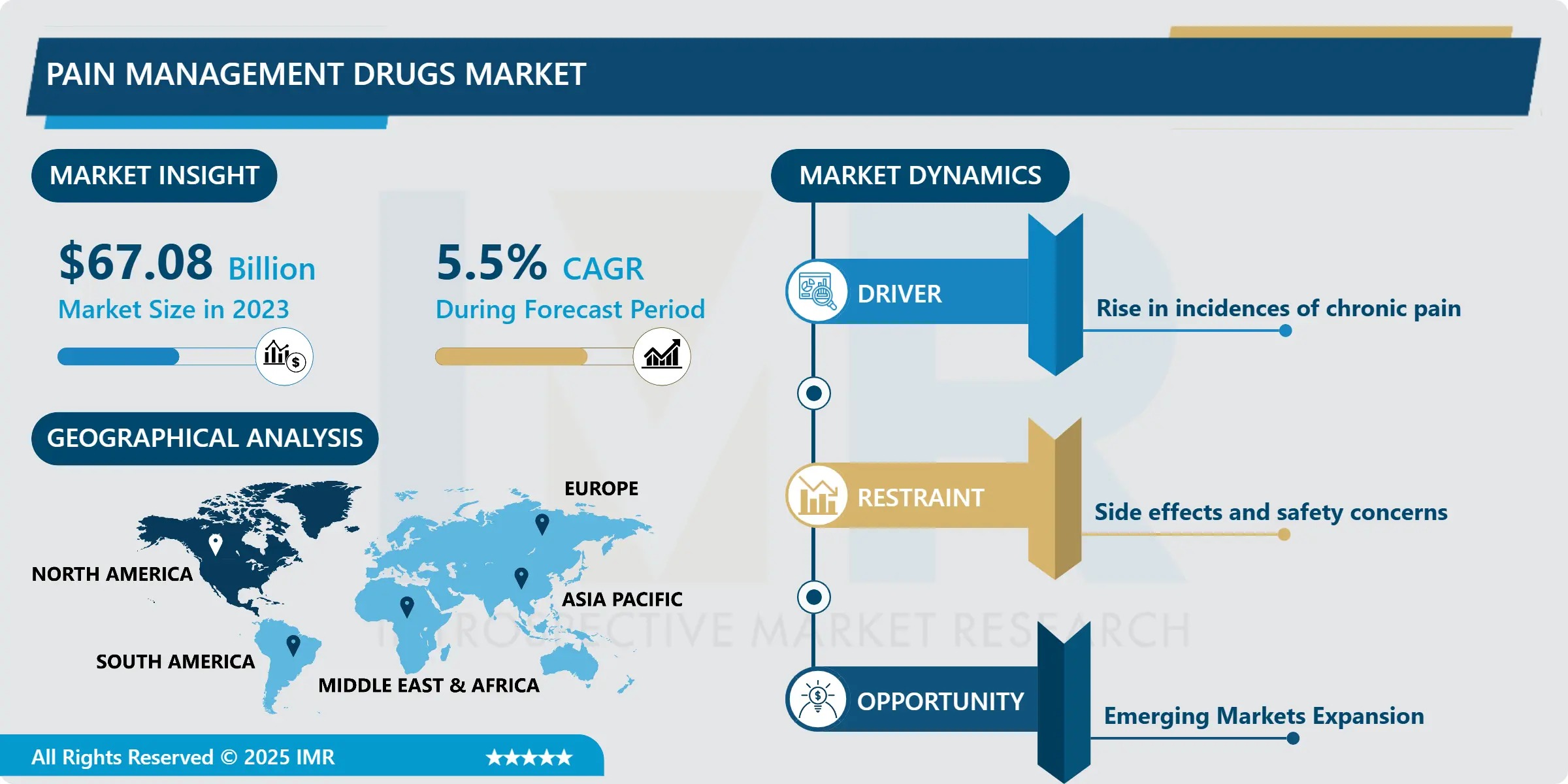
The Global Pain Management Drugs Market according to Introspective Market Research, highlights a robust valuation of $108.61 Billion in 2023 is projected to expand significantly, achieving a steady Compound Annual Growth Rate (CAGR) of 5.5% throughout the forecast period of 2024–2032. This substantial market expansion is fundamentally fueled by the accelerating global prevalence of chronic debilitating diseases-including arthritis, back pain, and cancer-coupled with the urgent need for effective, yet safer, alternatives to conventional treatments, particularly in the opioid segment.
The persistent challenge of pain remains a leading cause of disability worldwide. While traditional drug classes continue to dominate revenue, the current market dynamic is defined by a critical pivot: the dual pressure of managing the global opioid epidemic while simultaneously meeting the complex therapeutic needs of an aging population. The key drivers sustaining market momentum are the increasing number of surgical procedures (requiring acute pain management) and the long-term management of persistent chronic pain, which necessitates a continuous influx of novel pharmacological options.
Quick Insights: Defining the Pain Management Market Landscape
| Metric | Detail |
|---|---|
| Market Value (2023) | $108.61 Billion |
| Projected CAGR (2024–2032) | 5.5% |
| Dominant Drug Class | Opioids (Highest Revenue Segment) |
| Top Revenue Region | North America (High per-capita spending and advanced care) |
| Fastest-Growing Region | Asia Pacific (APAC) (Expanding healthcare access and patient awareness) |
| Leading Market Player | Pfizer Inc. (Strong portfolio across multiple pain segments) |
| Key Market Driver | Rising Incidence of Chronic Pain & Demand for Non-Addictive Therapies |
Market Dynamics: Revenue Breakdown by Drug Class and Application
The Pain Management Drugs Market is highly fragmented yet dominated by specific drug classes addressing varied pain types. The revenue structure reflects the long-standing use and therapeutic efficacy of established agents.
| Drug Class | Market Share Estimate (2023) | Revenue Projection (2032) | Key Differentiator |
|---|---|---|---|
| Opioids | 35% | Steady Growth | Indispensable for severe acute and cancer-related pain |
| Non-Steroidal Anti-Inflammatory Drugs (NSAIDs) | 30% | Volume Dominance | High use for mild-to-moderate and inflammatory pain |
| Anesthetics | 15% | Procedure-Driven Growth | Crucial for surgical and localized pain management |
| Anticonvulsants & Antidepressants | 20% | Highest CAGR | Growing use in chronic neuropathic pain |
The segment comprising Anticonvulsants and Antidepressants, utilized extensively for neuropathic pain and fibromyalgia, is forecasted to exhibit the highest CAGR as specialized pain clinics increasingly adopt multimodal therapy approaches, moving away from reliance solely on highly addictive options.
What are the New Frontiers in Pharmacological Interventions for Pain?
The most critical opportunity within the Pain Management Drugs Market is the successful commercialization of truly novel, non-addictive analgesics. The industry is channeling vast resources into therapeutic areas that offer disease modification rather than just symptom masking:
- Novel Non-Opioid Analgesics: Research is intensively focused on new molecular entities targeting peripheral pain mechanisms (e.g., Sodium Channel Blockers, NGF Inhibitors) to provide opioid-level relief without addictive properties.
- Biological and Gene Therapies: Exploring biologicals that can permanently alter the pain signal pathway, such as gene therapies aimed at silencing pain-signaling neurons, represents a long-term, high-impact trend.
- Precision Medicine: Utilizing genetic biomarkers to predict individual patient response to different analgesic classes, thereby minimizing trial-and-error treatment and reducing exposure to adverse drug effects.
“The Pain Management Market is undergoing a fundamental ethical and scientific re-evaluation,” states Dr. Eleanor Reed, Principal Consultant at Introspective Market Research. “The pressure from regulatory bodies and public health concerns is driving capital toward innovative molecules that target the underlying neurobiology of pain, rather than the opioid receptors. We are seeing major advancements in compounds that selectively inhibit specific sodium channels, offering hope for targeted relief in conditions like diabetic neuropathy without systemic toxicity or dependence risk. The success of these candidates will be the key determinant of market leadership in the next decade.”
Regional and Segmentation Analysis: Understanding Market Dynamics
Regional Dominance:
North America maintains a formidable lead in terms of revenue, primarily due to the established pharmaceutical ecosystem, high rate of diagnosis for chronic conditions, and a market willing to adopt high-cost innovative treatments. However, the sheer population size and the rapid modernization of healthcare infrastructure make the Asia Pacific (APAC) region, particularly countries like China and Japan, the fastest-growing market. This growth is accelerated by rising disposable incomes and increasing governmental emphasis on pain palliative care.
Segmentation Deep Dive:
- Application: The Chronic Pain segment holds the largest share, representing conditions that require long-term medication adherence. This segment is the primary target for new non-opioid R&D.
- Distribution Channel: The Retail Pharmacy channel dominates, reflecting the high volume of prescriptions filled for chronic, non-hospital-based pain management (NSAIDs, simple analgesics). The Hospital Pharmacy segment remains crucial for high-cost, specialized drugs and acute post-operative care.
Cost Pressures and Strategies for Cost-Efficient Pain Relief
The global burden of pain management is intensified by the high cost of both specialty and chronic medications, creating significant financial strain. Strategies to drive cost-efficiency and ensure equitable access are paramount:
- Accelerated Genericization: The timely introduction of generic equivalents for key branded drugs like certain NSAIDs, muscle relaxants, and older-generation anticonvulsants offers immediate cost savings to healthcare systems and patients.
- Enhanced Formulary Management: Implementing rigorous health economic assessments to prioritize non-opioid, cost-effective multimodal treatment plans before resorting to expensive, high-risk alternatives.
- Drug Repurposing: Leveraging existing, safe medications (e.g., certain antidepressants) for off-label use in pain management offers a low-cost, effective treatment pathway for specific conditions like fibromyalgia and nerve pain.
Key Benefits of the Global Pain Management Drugs Market Expansion
The market’s sustained growth and innovation deliver critical societal and patient benefits:
- Reduced Opioid Dependence: The focus on novel, non-addictive treatments is a direct benefit, helping to curb the dependency crisis and improve long-term patient health outcomes.
- Improved Functional Mobility: Effective pain control in chronic conditions (e.g., osteoarthritis) significantly improves patient quality of life, increases functional capacity, and reduces the risk of co-morbidities like depression.
- Economic Productivity: By reducing pain-related disabilities, the market contributes positively to global economic productivity by enabling patients to return to work and participate more actively in society.
Recent Breakthroughs and Top Company Movements
Pharmaceutical leaders are aggressively positioning themselves for the next wave of innovation:
- Johnson & Johnson and Eli Lilly are investing in Phase III trials for monoclonal antibodies targeting nerve growth factor (NGF), which represent a potential blockbuster class for osteoarthritis and chronic low back pain.
- Teva Pharmaceutical Industries is focusing on lifecycle management and generic versions of established pain medications, ensuring broad accessibility and cost-effective management across global health systems.
- Biogen is heavily backing research into compounds for neuropathic pain, recognizing the significant unmet need in conditions like post-herpetic neuralgia and painful diabetic neuropathy, reinforcing the industry’s shift towards specialty, high-value analgesics.
Request a Complimentary Sample Report or Schedule a Consultation
Introspective Market Research provides detailed market segmentation, competitor analysis, and strategic recommendations tailored for pharmaceutical executives, investors, and regulatory bodies focused on the Pain Management Drugs Market.
Download a Sample Report:
https://introspectivemarketresearch.com/request/20156
About Introspective Market Research
Introspective Market Research(IMR) is a visionary market research firm dedicated to providing business owners, researchers, and strategists with a comprehensive understanding of the market dynamics, emerging trends, and competitive landscapes across diverse sectors. Our reports are meticulously crafted to provide actionable intelligence, enabling clients to make informed, data-backed decisions.
Contact Information:
Name: Introspective Market Research
Email: info@introspectivemarketresearch.com
Phone: +91 91753-37569.