





Introspective Market Research is a premier global market research and consulting firm dedicated to providing business owners, investors.
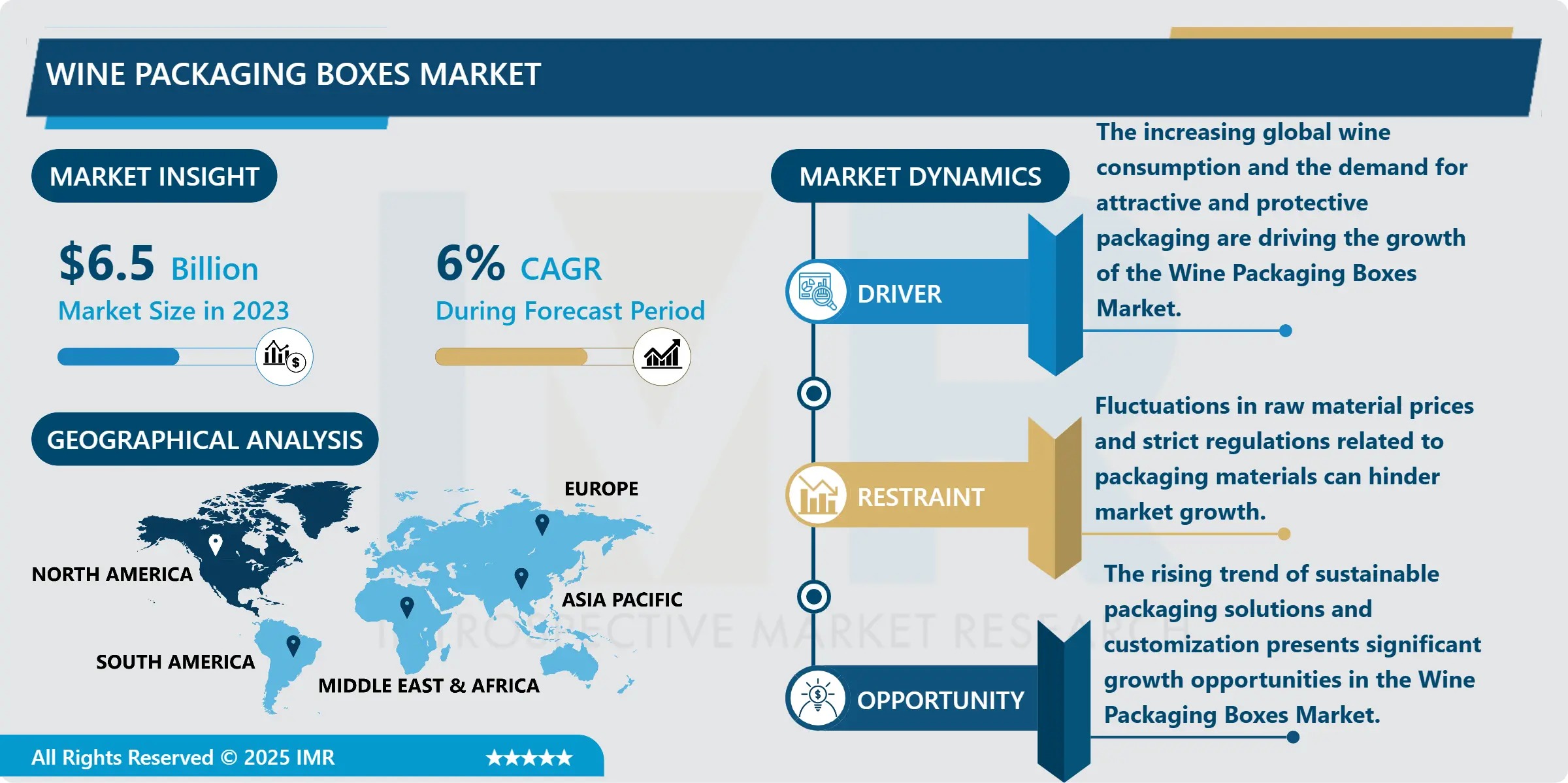
The Global Wine Packaging Boxes Market is experiencing a robust period of expansion, projected to reach a valuation of USD 10 Billion by 2032, climbing from USD 6.5 Billion in 2023. According to a new deep-dive analysis published by Introspective Market Research, this surge represents a steady Compound Annual Growth Rate (CAGR) of 6% over the forecast period of 2024–2032. The market’s upward trajectory is fundamentally fueled by two primary forces: the increasing global consumption of wine and the intensifying industry-wide demand for packaging that is both aesthetically attractive and robustly protective. Furthermore, the budding luxury wines market is accelerating the adoption of premium, customized packaging solutions designed to elevate the consumer’s perceived quality of the product.
Quick Insights: Wine Packaging Boxes Market Dynamics (2024–2032)
Market Valuation (2023): $6.5 Billion
Projected Valuation (2032): $10 Billion
Forecasted CAGR (2024–2032): 6.0%
Fastest Growing Region: Asia-Pacific, driven by rising disposable income and evolving consumer tastes.
Dominant Container Type: Glass Bottles, maintaining supremacy due to their established role in quality preservation and premium perception.
Key Accessory Segment: Labels, which serve as the primary marketing and identification tool, are expected to hold the largest market share in the Accessories segment.
Top-Line Driver: Global push towards sustainability and eco-friendly packaging materials.
Segmentation Snapshot: Where the Packaging Value Resides
The comprehensive market report meticulously segments the Wine Packaging Boxes market across key components, revealing critical areas of investment and growth.
| Segmentation Type | Dominant or Fastest-Growing Segment | Key Growth Factor |
| By Container | Glass Bottles | Superior shelf-life retention and premium brand image. |
| By Closure | Natural Corks | Traditional appeal, though Aluminum Screw Caps gain traction for cost-efficiency. |
| By Bulk Packaging | Flexitanks & IBCs | Facilitating large-volume, cost-effective global transport. |
| By Accessories | Labels & Boxes/Carriers | Crucial for branding, consumer decision-making, and safe transit. |
What’s Driving the $10 Billion Market and Where are the Next Opportunities?
The future of Wine Packaging is intrinsically linked to material innovation and consumer ethics. A key factor emerging is the pervasive shift toward sustainable packaging solutions. As consumers worldwide become increasingly aware of their environmental footprint, wineries are aggressively seeking out eco-friendly alternatives. This has resulted in a massive push for reusable and recycled materials, along with the incorporation of biodegradable and recyclable elements into wine boxes and carriers. This not only satisfies the growing segment of “green buyers” but also significantly enhances a brand’s corporate social responsibility profile.
Another paramount trend is the continuous focus on Customization and Premium Packaging. The aesthetic quality of the packaging is now seen as an extension of the wine itself, especially for gift-giving and high-end purchases. Manufacturers are responding with advanced printing technologies, bespoke engraving options, elegant finishes, and specialized padded inserts that guarantee product safety while delivering a magazine-like shelf presence. The integration of protective packaging enhancements, such as specialized padded inserts, is critical for protecting high-value shipments during transit. This dual focus on sustainability and aesthetic luxury represents the prime opportunity for market players in the coming decade.
Expert Outlook on the Future of Wine Packaging
“The narrative of wine packaging is shifting from mere protection to powerful brand storytelling,” states Dr. Anya Sharma, Principal Consultant at Introspective Market Research. “The transition is irreversible: sustainable materials are no longer a niche preference but a necessary competitive differentiator. We are seeing a critical mass of manufacturers prioritizing lightweight, recyclable formats like bag-in-box and eco-friendly molded fiber carriers to meet regulatory pressures and consumer demand. For companies to win, they must balance high-end presentation with a demonstrable commitment to the planet. The next generation of wine packaging will be smart, minimal, and entirely recyclable, simultaneously driving down long-term costs and boosting brand equity.”
Asia-Pacific Leads Global Growth with Focus on Premiumization
The regional analysis highlights Asia-Pacific as the region slated for the fastest CAGR growth from 2024 to 2034. This aggressive growth is directly linked to the rapid proliferation of wine culture in countries like China and India, coupled with increasing disposable incomes. Consumers in this region are displaying a heightened willingness to invest in premium, high-quality brands, which in turn fuels the demand for bespoke and aesthetically sophisticated packaging solutions. While North America and Europe remain mature markets, their growth will be steadily driven by regulatory pushes for greater recyclability and the continued dominance of established segments like Glass Bottles and natural cork closures.
Latest Breakthroughs and the Quest for Cost-Efficient Wine Packaging
Leading industry players are heavily investing in R&D to address the twin challenges of premium aesthetics and cost optimization. Amcor Limited, a key market participant, recently showcased a next-generation, fiber-based wine carrier box—a fully recyclable, lightweight alternative to traditional materials. This innovation is a direct response to the market’s sustainability mandate. Similarly, companies like Ardagh Group SA and Ball Corporation are developing lighter glass and aluminum formats, respectively, which significantly reduce both raw material consumption and shipping costs, offering dual financial and environmental benefits.
Cost Pressures and Benefits of Smart Packaging:
The main constraint facing the market is the fluctuation in raw material prices. To combat this, smart packaging solutions, such as Bag-in-Box containers, offer a significant cost-efficiency advantage by reducing weight, minimizing breakage risk, and extending the shelf life of opened wine, leading to reduced waste—a tangible benefit for both producers and consumers. The initial investment in modern, high-volume automated packaging lines also proves cost-effective in the long run, minimizing labor costs and optimizing material usage, thereby enhancing profitability.
Act Now: Download the Full Report and Strategic Data
Ready to navigate the evolving Wine Packaging Boxes Market landscape and capitalize on the shift to sustainable and premium packaging? Access the full market analysis today.
Download Sample Report / Schedule a Briefing: [https://introspectivemarketresearch.com/request/20042]
About Introspective Market Research
Introspective Market Research(IMR) is a premier global market research and consulting firm dedicated to providing business owners, investors, and stakeholders with comprehensive, data-driven insights. Our reports deliver actionable intelligence on emerging industry trends, market dynamics, and competitive landscapes, enabling clients to make informed strategic decisions and achieve sustainable growth in diverse global markets.
Contact Information:
Phone Number: +91 91753-37569.
Email: info@introspectivemarketresearch.com
Company Website: https://introspectivemarketresearch.com